
Dermarolling
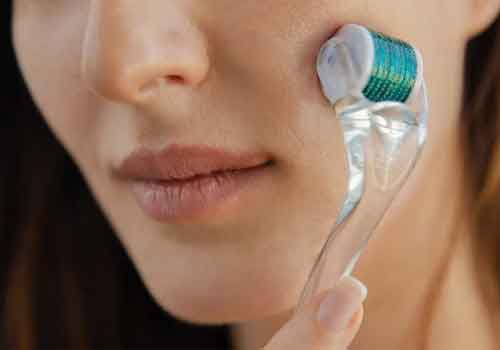
A dermaroller is a skin care device used to help rejuvenate the skin, treat acne scarring, and reduce signs of aging. But how does dermarolling work?
Dermarolling or microneedling is a process that was originally carried out by a dermatologist. Nowadays, it is also commonly done at home with little training. It has gained popularity in recent years as an accessible, effective, and relatively non-invasive skin treatment.
This article explores how dermarollers work and how to use one. It also offers tips for getting the best results.
What is a Dermaroller?
"So, there’s the dermaroller—the manual device—and then there’s microneedling, which is the basic technique. The common size for a dermaroller is 0.25 and what those needles do is make a little microchannel into the skin so the product or serum will penetrate deeper into the skin,” Markarian explains to me. Whatever serum you choose to use will fill into those tiny incisions created by the dermaroller to allow the product to work its magic. But there’s more.
Who would benefit most from dermarolling?
While dermarolling has a slew of benefits for different skin types, Markarian suggests those battling acne scars could see great results from incorporating a dermaroller in their routine. “It all depends upon what serums you're using because you want the product to penetrate deeper to minimize the appearance of scarring,” she says. “Using a dermal roller at 0.25 with a particularly high-quality vitamin C serum would make a huge improvement in clearing up their scarring.” But she wouldn't go as far as to say it would take away the scarring completely. She does recommend microneedling for those with rosacea. “Microneedling is wonderful for rosacea because you would be using a serum that would also be treating the rosacea, so anything hydrating. Those hydrating ingredients would penetrate deeper; therefore, their skin would reap the benefits of it much more than if they just applied it on the skin.”
How it works
When the dermaroller is rolled over the skin, the small, fine needles on the roller puncture the skin.
The holes that the needles create in the skin are tiny and considered to be superficial. For this reason, the treatment is not seen as invasive.
When the skin is punctured, this creates a controlled skin injury. It does not cause actual damage to the outer layer of skin. The needles help to break down any scar tissue.
This triggers the body’s wound healing response, and the following occurs:
- the skin releases substances that stimulate growth
- new blood vessels form in the skin
- the skin starts to make more collagen
Over the next 5 days, the collagen produced by the body is deposited in the area of treated skin. This helps the skin to become firmer and may reduce the appearance of fine wrinkles.
Uses of a dermaroller
Dermarolling was originally used by dermatologists as a way of boosting collagen production for treating facial scars and skin rejuvenation.
It is now also used as a way to deliver therapeutic drugs and vaccines through the skin.
In addition, it has gained popularity as a home treatment to improve the appearance of the skin. Many people use it to try to combat the signs of aging, such as:
- loss of skin firmness
- appearance of fine lines
- start of wrinkles
Some people also use it to try to reduce pore size or reduce the production of an oil called sebum if their skin is oily. Others try dermarollers to try to improve the appearance of stretch marks.