
Stretch Marks
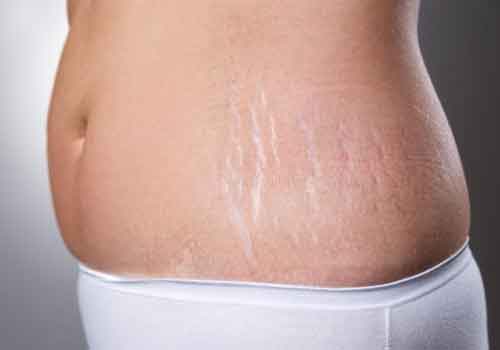
Stretch marks are long, narrow streaks, stripes, or lines that develop on the skin. They occur when the skin is suddenly stretched and are extremely common.
Anyone can develop stretch marks, although they tend to affect more women than men.
They can occur on a range of body parts, including the stomach, thighs, hips, breasts, upper arms, and lower back.
This type of scarring happens when the skin cannot resume normal form after a period of intense growth, often due to pregnancy, weight gain, weight loss, or puberty. Over 50 percent of women experience stretch marks during pregnancy.
Fast facts on stretch marks
- Stretch marks are long, narrow streaks or stripes that occur when the skin is stretched too quickly.
- Pregnancy, puberty, and rapid weight gain can all cause stretch marks.
- There is little medical evidence available confirming the effectiveness of current treatments for stretch marks.
- Stretch marks often fade over time without treatment and do not pose any serious long-term health risks.
What are stretch marks?
Stretch marks are scars or disfiguring lesions. They are also called striae, striae distensae (SD), striae atrophicans, and striae gravidarum.
The most common areas affected include:
- abdomen
- breasts
- hips
- flank
- buttocks
- thighs
Stretch marks are not physically dangerous but can cause problems with self-image and anxiety. For some people, stretch marks are a significant cosmetic concern that can affect day-to-day living.
Signs and Symptoms
Before stretch marks begin to emerge, the skin can appear thin and pink. It may also feel irritated or itchy.
The marks initially develop as wrinkly, raised streaks that can be red, purple, pink, reddish-brown or dark brown, depending on skin color. The streaks eventually fade and flatten and tend to change to a silvery color over time.
Stretch marks may gradually become less noticeable, but this can often take years.