
Vitiligo
What Is Vitiligo?
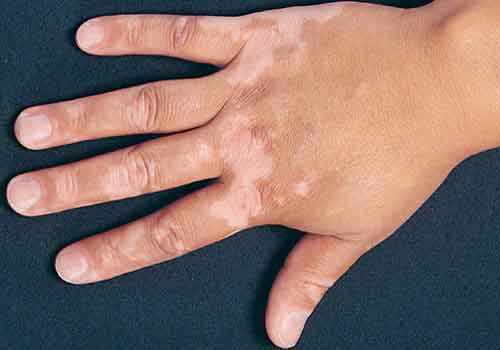
Vitiligo is a skin disorder that causes the skin to lose its color. Smooth white areas (called macules if less than 5mm or patches if 5mm or larger) appear on a person’s skin. If you have vitiligo in a place that has hair, the hair on your body may also turn white.
The condition occurs when melanocytes (the skin cells that produce melanin, the chemical that gives skin its color, or pigmentation) are destroyed by the body’s immune system.
How does vitiligo progress?
Vitiligo usually begins with a few small white patches that may gradually spread over the body over the course of several months. Vitiligo typically begins on the hands, forearms, feet, and face but can develop on any part of the body, including the mucous membranes (moist lining of the mouth, nose, genital, and rectal areas), the eyes, and inner ears.
Sometimes the larger patches continue to widen and spread, but usually they stay in the same place for years. The location of smaller macules shifts and changes over time, as certain areas of skin lose and regain their pigments. Vitiligo varies in the amount of skin affected, with some patients experiencing few depigmented areas and others with widespread loss of skin color.
What are the types of vitiligo?
Vitiligo can be:
- Generalized, which is the most common type, when macules appear in various places on the body.
- Segmental, which is restricted to one side of the body or one area, such as the hands or face.
- Mucosal, which affects mucous membranes of the mouth and/or the genitals.
- Focal, which is a rare type in which the macules are in a small area and do not spread in a certain pattern within one to two years.
- Trichome, which means that there is a white or colorless center, then an area of lighter pigmentation, and then an area of normally colored skin.
- Universal, another rare type of vitiligo, and one in which more than 80% of the skin of the body lacks pigment.
What causes vitiligo?
Although the causes of vitiligo aren’t completely understood, there are a number of different theories:
- Autoimmune disorder: The affected person’s immune system may develop antibodies that destroy melanocytes.
- Genetic factors: Certain factors that may increase the chance of getting vitiligo can be inherited. About 30% of vitiligo cases run in families.
- Neurogenic factors: A substance that is toxic to melanocytes may be released at nerve endings in the skin.
- Self-destruction: A defect in the melanocytes causes them to destroy themselves.
Vitiligo may also be triggered by certain events, such as physical or emotional stress. Because none of the explanations seem to completely account for the condition, it’s possible that a combination of these factors is responsible for vitiligo.