
Psoriasis
What is psoriasis?
Psoriasis is a chronic autoimmune condition that causes the rapid buildup of skin cells. This buildup of cells causes scaling on the skin’s surface.
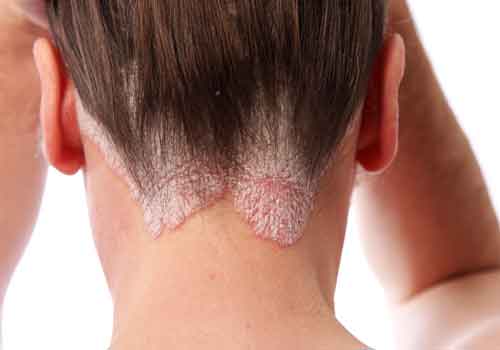
Inflammation and redness around the scales is fairly common. Typical psoriatic scales are whitish-silver and develop in thick, red patches. Sometimes, these patches will crack and bleed.
Psoriasis is the result of a sped-up skin production process. Typically, skin cells grow deep in the skin and slowly rise to the surface. Eventually, they fall off. The typical life cycle of a skin cell is one month.
In people with psoriasis, this production process may occur in just a few days. Because of this, skin cells don’t have time to fall off. This rapid overproduction leads to the buildup of skin cells.
Scales typically develop on joints, such elbows and knees. They may develop anywhere on the body, including the:
- hands
- feet
- neck
- scalp
- face
Less common types of psoriasis affect the nails, the mouth, and the area around genitals.
- type 2 diabetes
- inflammatory bowel disease
- heart disease
- psoriatic arthritis
- anxiety
- depression
What are the symptoms?
Psoriasis symptoms differ from person to person and depend on the type of psoriasis. Areas of psoriasis can be as small as a few flakes on the scalp or elbow, or cover the majority of the body.
The most common symptoms of plaque psoriasis include:
- red, raised, inflamed patches of skin
- whitish-silver scales or plaques on the red patches
- dry skin that may crack and bleed
- soreness around patches
- itching and burning sensations around patches
- thick, pitted nails
- painful, swollen joints
Not every person will experience all of these symptoms. Some people will experience entirely different symptoms if they have a less common type of psoriasis.
Most people with psoriasis go through “cycles” of symptoms. The condition may cause severe symptoms for a few days or weeks, and then the symptoms may clear up and be almost unnoticeable. Then, in a few weeks or if made worse by a common psoriasis trigger, the condition may flare up again. Sometimes, symptoms of psoriasis disappear completely.
When you have no active signs of the condition, you may be in “remission.” That doesn’t mean psoriasis won’t come back, but for now you’re symptom-free.
Is psoriasis contagious?
Psoriasis isn’t contagious. You can’t pass the skin condition from one person to another. Touching a psoriatic lesion on another person won’t cause you to develop the condition.
It’s important to be educated on the condition, as many people think psoriasis is contagious.